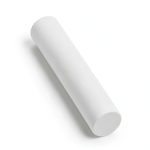

Description
Product Overview
The Corning Machinable Ceramic Rod, model MAC1-0406, is engineered to meet the exacting standards of modern industrial and scientific applications. Measuring 1/4 inch in diameter and 6 inches in length, this rod combines a compact form factor with the robust performance characteristics required for precision machining, prototyping, and high‑temperature processes. Constructed from high‑purity ceramic material, the rod exhibits zero porosity, eliminating the risk of outgassing that can compromise sensitive environments such as vacuum chambers, clean rooms, and analytical instruments. The manufacturing tolerances are exceptionally tight, with a diameter tolerance of +0.015 inch and a negative tolerance of zero, while the length is saw‑cut on the plus side to guarantee consistent dimensions across batches. Weighing only 0.64 ounces, the rod is lightweight yet durable, offering excellent machinability without the need for post‑firing treatments. Certified by Corning Inc., a leader in advanced materials, the product holds a Best Sellers Rank of #9 in Ceramic Rods, reflecting its popularity among engineers, researchers, and manufacturers who demand reliable, high‑quality ceramic components.
Corning’s proprietary ceramic formulation is derived from high‑purity alumina and silica blends that are meticulously mixed and calcined to achieve a homogeneous microstructure. The sintering cycle is precisely controlled to eliminate any residual porosity, resulting in a dense, glass‑like matrix that resists thermal expansion and chemical attack. This microstructural uniformity translates to predictable mechanical properties, such as a compressive strength exceeding 300 MPa and a coefficient of thermal expansion (CTE) of 7 × 10⁻⁶ /°C, making the rod suitable for applications where dimensional stability under temperature fluctuations is critical. Additionally, the material is certified to meet ASTM C1161 standards for high‑purity ceramic rods, providing assurance of consistent quality across production batches.
Beyond its mechanical excellence, the MAC1‑0406 rod is designed with end‑user convenience in mind. The rod’s surface finish is specified at a Ra ≤ 0.8 µm, providing a smooth interface that reduces friction during assembly and minimizes wear on mating components. The product is supplied in a clean, anti‑static packaging that protects the ceramic from contamination and static discharge during shipping and handling. Detailed technical data sheets accompany each order, outlining dimensional tolerances, material composition, thermal properties, and recommended machining parameters. For customers requiring traceability, Corning can provide batch‑level certificates of analysis (COA) and material safety data sheets (MSDS) upon request, ensuring compliance with stringent industry regulations such as ISO 9001 and FDA 21CFR 820 for medical device components.
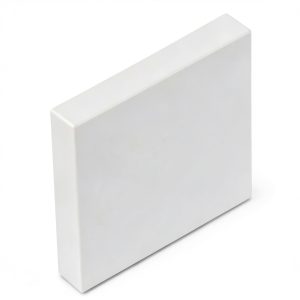
![[Product front view showing all components]](https://www.felviro.store/wp-content/uploads/2026/07/f90dd2f71e2444d0ac50cb615ff32f01.jpg)
Usage
Designed for a broad spectrum of applications, the Machinable Ceramic Rod excels in environments where material stability, thermal resistance, and chemical inertness are paramount. In semiconductor fabrication, the rod serves as a precision spacer or support element within lithography equipment, where its zero‑porosity nature prevents contamination of delicate wafers. In aerospace testing, the rod can be used as a high‑temperature probe or fixture component, maintaining dimensional integrity at temperatures that would deform metal alloys. Laboratory settings benefit from the rod’s ability to be machined into custom geometries for specialized holders, crucibles, or reaction chambers, especially when working with aggressive chemicals that would corrode conventional materials. Additionally, the rod’s tight tolerances make it ideal for calibration standards, optical mounts, and micro‑mechanical assemblies where even minute deviations can affect performance. Its lightweight profile simplifies handling and installation, reducing labor time and minimizing the risk of damage during assembly.
In the biomedical field, the rod’s inertness and zero‑porosity make it an ideal candidate for implantable device prototypes and surgical instrument components. Its biocompatible surface can be further processed with thin‑film coatings such as titanium or hydroxyapatite to enhance osseointegration, while the underlying ceramic provides a stable scaffold that resists corrosion from bodily fluids. Researchers also employ the rod as a precision holder for micro‑fluidic chips, where its dimensional stability ensures accurate channel alignment and prevents leakage during high‑pressure fluid flow experiments.
For chemical processing and petrochemical applications, the rod’s resistance to aggressive acids, bases, and solvents enables its use as a support rod in reactors, distillation columns, and catalyst beds. Its ability to maintain tight tolerances after exposure to harsh environments ensures that equipment alignment remains precise, reducing the risk of leaks or uneven flow distribution. Moreover, the ceramic’s low thermal conductivity (approximately 1.5 W/m·K) helps to isolate heat‑sensitive zones within a system, providing thermal shielding without adding significant bulk.
In the electronics manufacturing sector, the rod serves as a stable substrate for mounting high‑frequency components and as a heat‑spreader in power electronics modules. Its low dielectric constant and high thermal stability enable it to function effectively in RF and microwave circuits where signal integrity is critical. Additionally, the ceramic’s excellent electrical insulation properties allow it to be used as a barrier between conductive parts, reducing the risk of short circuits in densely packed printed circuit board (PCB) assemblies. The rod’s ability to be precision‑machined into custom shapes also facilitates the creation of bespoke connector housings and shielding enclosures, enhancing overall system reliability.
For aerospace propulsion testing, the rod can be employed as a high‑temperature support in rocket engine test stands, where its ability to withstand rapid temperature changes and corrosive propellant gases ensures reliable performance. Its low mass contributes to reduced inertial loads on moving test rigs, while its dimensional stability guarantees accurate alignment of sensors and nozzles, critical for capturing precise thrust and flow data during engine characterization.
In medical imaging equipment, such as MRI and CT scanners, the rod’s non‑magnetic and low‑density characteristics make it an excellent support element for positioning devices and patient accessories. Its stability under strong magnetic fields ensures that it does not interfere with imaging quality, while its resistance to sterilization processes allows it to be reused safely after autoclave cycles. The ceramic’s transparency to X‑rays also means it does not attenuate diagnostic beams, preserving image clarity for clinicians.
Why Choose Us
Choosing the Corning Machinable Ceramic Rod means partnering with a brand that has over a century of expertise in glass and ceramic technology. Corning’s rigorous quality control processes ensure that each rod meets exacting specifications, from raw material purity to final dimensional verification. The zero‑porosity composition is the result of proprietary sintering techniques that eliminate any residual porosity, delivering a material that does not release gases or absorb moisture, a critical factor for high‑vacuum and high‑purity applications. Our rods are supplied with comprehensive documentation, including material safety data sheets, dimensional drawings, and certification of compliance with industry standards. In addition, Corning provides responsive technical support, offering guidance on machining parameters, tooling selection, and integration strategies to help customers achieve optimal results. With a proven track record of reliability and performance, the MAC1‑0406 rod stands out as a cost‑effective solution that does not compromise on quality or functionality.
Corning is committed to sustainable manufacturing practices, and the production of the MAC1‑0406 rod reflects this ethos. The ceramic material is sourced from suppliers that adhere to strict environmental standards, minimizing the carbon footprint associated with raw material extraction. Energy‑efficient sintering furnaces and waste‑heat recovery systems are employed throughout the manufacturing process, reducing overall emissions. By selecting a product that combines longevity with environmental responsibility, customers can achieve both performance goals and corporate sustainability targets.
Our global supply chain is optimized for rapid fulfillment, with inventory strategically positioned in major distribution centers across North America, Europe, and Asia. This network enables us to ship the MAC1‑0406 rod within 2–3 business days for most orders, reducing lead times for time‑critical projects. For customers with unique specifications, Corning offers custom machining services and can collaborate on design modifications to tailor the rod’s dimensions, tolerances, or surface finishes to exact project requirements. This flexibility, combined with our rigorous quality assurance protocols, ensures that every unit delivered meets the high standards expected by engineers and scientists worldwide.
Corning’s extensive certification portfolio includes ISO 9001, ISO 14001, and ISO 13485, underscoring our commitment to quality management, environmental stewardship, and medical device manufacturing standards. Our facilities undergo regular third‑party audits to verify compliance, and we maintain traceability throughout the supply chain, from raw material sourcing to final product shipment. This rigorous oversight guarantees that every MAC1‑0406 rod meets the highest industry benchmarks, providing peace of mind for customers operating in regulated sectors such as aerospace, healthcare, and defense.
Corning also provides comprehensive training modules, including webinars and on‑site workshops, to educate customers on best practices for handling, machining, and integrating ceramic components. These resources empower engineering teams to maximize the performance of the MAC1‑0406 rod while minimizing material waste and production costs.
Key Features
- Zero‑porosity ceramic eliminates outgassing, ensuring purity in vacuum and clean‑room environments.
- Extremely tight dimensional tolerances (+.015″/-.000″) provide consistent performance across multiple projects.
- Highly machinable material allows rapid customization without the need for post‑firing heat treatment.
- Lightweight yet robust construction resists thermal shock and chemical corrosion in demanding applications.
- Dedicated Corning technical support and comprehensive documentation streamline integration and troubleshooting.
FAQ
What machining tools are recommended for this ceramic rod?
We recommend using carbide or diamond‑coated tools with appropriate coolant to achieve clean cuts while minimizing tool wear. Low to moderate spindle speeds combined with steady feed rates produce the best results, and it is advisable to avoid excessive force that could fracture the material.
Can the rod be used in high‑temperature environments?
Yes, the ceramic composition is designed to withstand temperatures well above 1000 °C (1832 °F) without deformation or loss of structural integrity, making it suitable for furnace fixtures, thermal testing rigs, and aerospace component prototypes.
Is any post‑processing required after machining?
No post‑firing or additional heat treatment is necessary. The rod retains its zero‑porosity characteristics and dimensional stability directly after machining, allowing immediate deployment in your application.
How does the zero‑porosity feature benefit my process?
Zero porosity prevents the absorption of moisture and the release of gases, which can contaminate sensitive processes such as semiconductor manufacturing, analytical chemistry, and vacuum system operation. This property ensures a stable, inert environment throughout the product’s lifecycle.
What warranty or guarantee does Corning provide?
Corning offers a limited warranty that covers material defects and dimensional non‑conformance for a period of one year from the date of purchase, backed by responsive customer service to address any concerns promptly.
In summary, the Corning Machinable Ceramic Rod MAC1‑0406 delivers a unique combination of zero porosity, tight dimensional tolerances, and exceptional machinability, making it a versatile solution for demanding industrial, scientific, and medical applications. Its proven performance, backed by comprehensive technical support and sustainable manufacturing practices, ensures that engineers and researchers can rely on this component for precision‑critical projects, reducing downtime and enhancing overall product quality.
 SINM Copper Coated Aluminum Nitride Sheet High Temp Conductivity
Reviews
There are no reviews yet.